



The Player’s Guide To Poker Online
If you’ve ever been curious about what makes poker online such a timeless favourite, you’re in for an easy ride. Maybe you’re testing out your first hand, or you’ve played before and just want a quick refresher on your poker skills – either way, this guide has you covered. You’ll even discover how this iconic card game earned its place among every great casino with table games, blending skill, luck, and just the right amount of suspense.
Think of this as a chat over a cup of coffee – relaxed, informative, and full of those “aha” moments that make online poker fun to learn.
Getting Started With Online Poker
Exploring poker online opens a world of entertainment for players, and you’ll find plenty of exciting options when browsing an online casino Ontario platform, where you can experience different poker games at your own pace.
Unlike some fast-paced casino titles, poker has a slower rhythm that rewards patience, observation, and clever thinking. Once you get the hang of the poker rules, it’s all about reading your opponents and knowing when to hold, fold, or raise your poker chips with confidence.
Understanding Poker Hands
The foundation of every game lies in poker hands – the combinations of poker cards that decide who takes home the pot. Each player aims to form the strongest hand from five cards. Here’s a quick look at classic poker hand rankings, ranging from strongest to weakest:
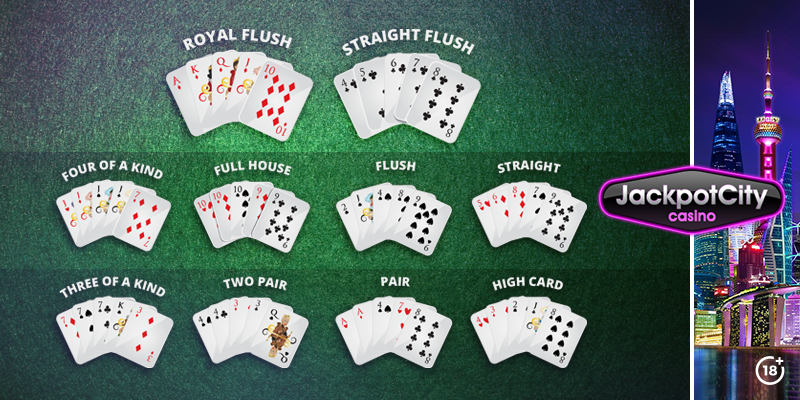
- Royal Flush: The unbeatable hand: Ace through Ten, all in the same suit.
- Straight Flush: Five cards lined up in sequence, sharing the same suit.
- Four of a Kind: Four matching card values, like four Kings or four 7s.
- Full House: A combo of three matching cards plus a separate pair.
- Flush: Any five cards that share a suit but aren’t in sequence.
- Straight: Five cards in numerical order, but from mixed suits.
- Three of a Kind: Three cards of identical rank, paired with two unconnected cards.
- Two Pair: Two distinct pairs, such as two 9s and two 5s.
- One Pair: A single set of matching cards, like two Queens.
- High Card: No combinations? Then your strongest single card takes the lead.
Once you know these by heart, reading your poker hands mid-game becomes second nature.
How To Play: The Basics Of Online Poker
Learning how to play poker is surprisingly simple once you’ve seen a few rounds. The game combines chance with decision-making, and every move matters. Here’s the usual flow of play:
- Each player places an opening bet.
- Everyone receives their poker cards.
- Players bet, raise, or fold in turn.
- The dealer reveals community cards (relevant to most poker games).
- A final round of betting follows.
- The player with the best hand wins the pot.
From classic Texas Hold’em to Omaha, each version offers its own twist, but all rely on the same mix of psychology and probability.
Following The Poker Rules
The poker rules are universal, though each variant adds its own spin. In online poker, many of these are built right into the software, so you don’t have to worry about dealing, shuffling, or tracking turns – the platform handles it all. Still, a few basics always hold true:
- Respect the betting order.
- Don’t wager more than what’s in your stack.
- Once you fold, you’re out of the hand.
- Keep track of your virtual poker chips as carefully as you would real ones.
In live games, good manners mean keeping quiet about your poker cards and staying cool when a bluff works. Online, it’s all about fair play – avoid distractions, stay focused, and don’t rush your decisions just because the next hand deals fast.
The Power Of Poker Chips
In both traditional and poker online settings, poker chips represent your stake, helping you follow the flow of bets without the mess of handling cash. In online versions, your chips are displayed digitally, making it easy to see exactly how much you’ve got left at any point in the game. Common chip colours in physical games usually stand for different values:
- White: smallest denomination
- Red: medium value
- Blue or black: higher value
In online poker, you’ll still see these colour cues on-screen – they’re there to keep things familiar and intuitive. Keeping your virtual stack organised might not require neat piles, but managing your chips wisely is just as important for staying in the game and reading the rhythm of the poker table.
Learning The Lingo: Common Poker Terms
You’ll hear plenty of unique expressions tossed around any poker table. Knowing a few makes you sound like a seasoned player right away. A few handy poker terms:
- Bluff: Pretending you’ve got the winning hand.
- Check: Passing the bet without adding chips.
- Call: Matching another player’s bet.
- Raise: Increasing the current bet.
- Fold: Stepping out of the hand.
- All-in: Betting everything you’ve got left.
It might sound like another language at first, but you’ll soon pick up the rhythm. And honestly, shouting “I call!” feels far cooler than you’d expect.
Around The Poker Table
The classic poker table – whether real or virtual – sets the stage for strategy. It’s usually oval-shaped, giving everyone a clear view of cards and chips. Each position at the table matters:
- Dealer: Handles the cards (or button position in online poker).
- Small Blind: First mandatory bet before the cards are dealt.
- Big Blind: Second mandatory bet, slightly larger.
Knowing where you sit can influence how you play your poker hands. Players in later positions, for example, get to see how others act before making their own moves.
How Many Poker Cards In A Deck?
If you’ve ever wondered how many poker cards are in a deck, the answer’s a neat 52. There are four suits – hearts, diamonds, clubs, and spade – with 13 cards each. Most standard games skip jokers, though a few fun home variants keep them in play. Once you recognise the structure, poker hand rankings start to make even more sense, and calculating your odds becomes much easier.
Wrapping Up the Game
By now, you’ve got the essentials of how to play poker – from poker rules and poker hands to poker chips, poker terms, and everything in between. Each game teaches you something new, whether it’s spotting a clever bluff or keeping your cool under pressure. That’s what makes poker online so enjoyable: a mix of logic, luck, and laughter that keeps every round fresh.
So next time you take a virtual seat: stack your chips, deal your cards, and let your poker face do the talking.